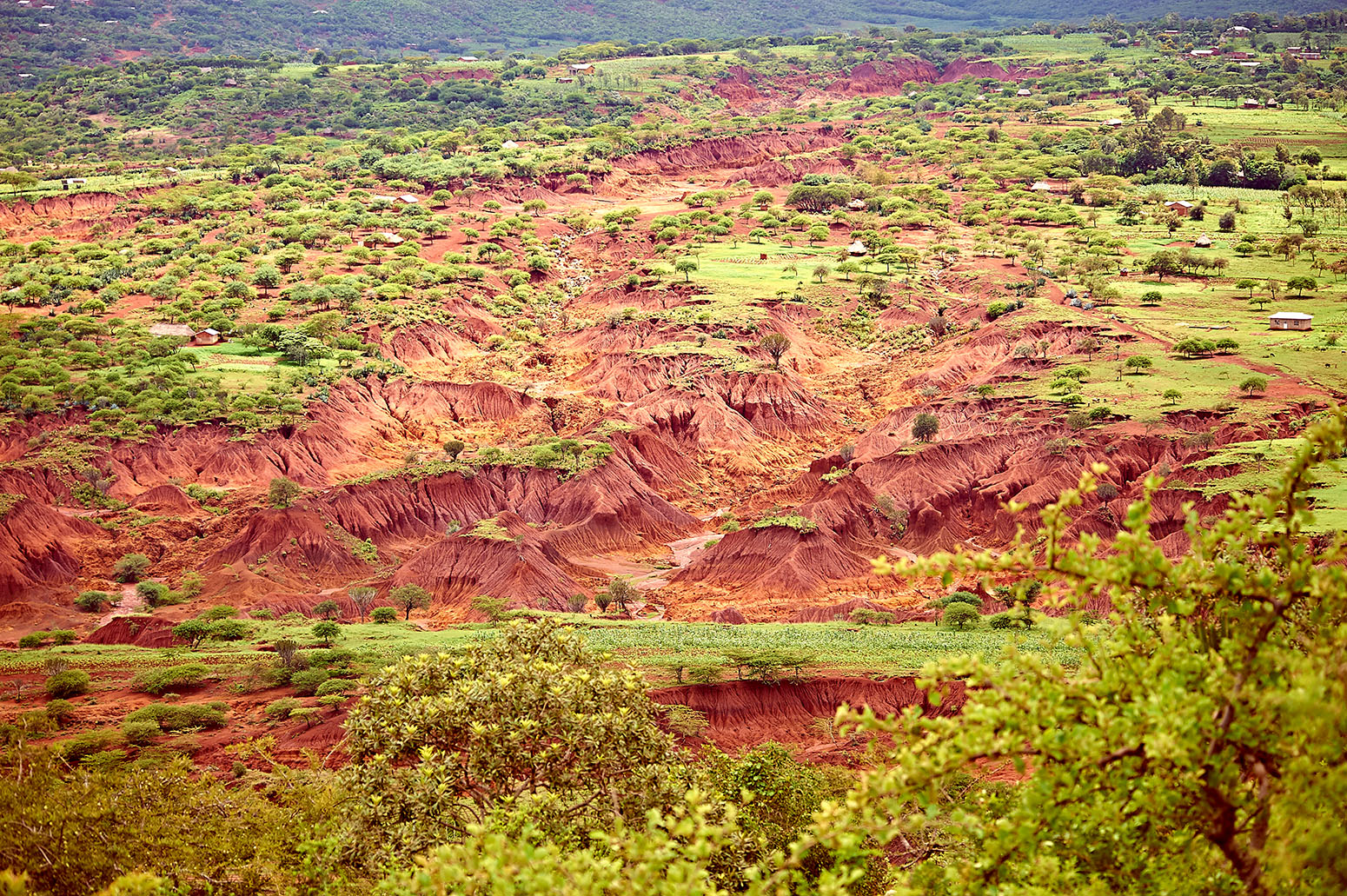

What is Desertification?
Desertification is the process by which fertile land becomes desert, typically as a result of drought, deforestation, or inappropriate agriculture.
Background information
Drought, overgrazing, fire, and deforestation can thin out vegetation, leaving exposed soil. If the nutrient-rich top soil blows or washes away, plants may not be able to return. Over farming or drought can change the soil so that rain no longer penetrates, and the plants lose the water they need to grow. If the changing force is lifted—drought ends or cattle are removed, for example—but the land cannot recover, it is desertified.
In order to say land is desertified, you need to track change over a long period to see if vegetation is permanently altered. This make take ten to twenty years to see.
Triggers to see if desertification is happening in areas, scientists look at plant growth. Growth will no longer follow the rains. The vegetation index over desertified land would remain low, even after rain.
Current Impacts
What does this mean for businesses?
Desertification has already reduced agricultural productivity and incomes and contributed to the loss of biodiversity in some dry land regions. In many dry land areas, spread of invasive plants has led to losses in ecosystem services, while over-extraction is leading to groundwater depletion. Unsustainable land management, particularly when coupled with droughts, has contributed to higher dust-storm activity, reducing human well-being in drylands and beyond. Higher intensity of sand storms and sand dune movements are causing disruption and damage to transportation and solar and wind energy harvesting infrastructures.
Since everything in interconnected in our globalized world, for companies the impact of desertification might effect the way you procure and sell products and operate business.
Next Steps
While this might be the role of state actors or NGO’s , there are a few opportunities for companies to step in.
- Investing in local projects to protect, prevent and reverse desertification
- Engaging with suppliers to reduce degradation of land.
- Innovate products that improve agricultural sustainability
- Donations to NGO’s and organizations that are working towards reversing desertification.
Learn More!
Take our EcoLearn courses to find out how Desertification is affecting your business and ways you can reduce your impact!

 https://www.nationalgeographic.com/environment/article/desertification
 https://www.carbonbrief.org/explainer-desertification-and-the-role-of-climate-change/